Bathroom
Large-Format Bathroom Remodel
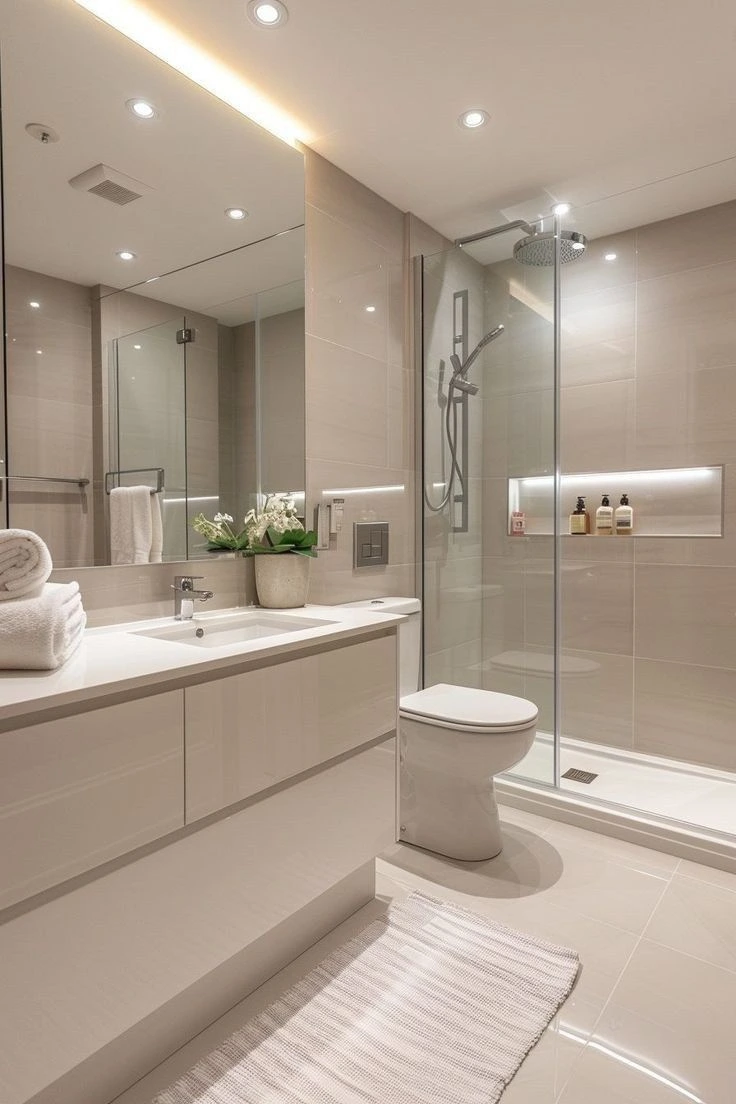
Full bathroom tile in a Midtown high-rise condo, concrete slab substrate, large-format beige porcelain.
Midtown Atlanta is dense, urban, and heavily condo-driven. The housing stock along Peachtree Street and 10th Avenue consists largely of mid- and high-rise buildings where every renovation requires freight elevator reservations, noise ordinance compliance, and coordination with building management before the first tool is unloaded. We have this process down.
We confirm freight elevator availability, noise hours, and any building-specific material restrictions before scheduling.
Floors and elevator interiors are protected during material delivery. We use floor runners and corner guards as standard practice.
Many Midtown buildings require low-VOC products. We stock and use compliant adhesives and grouts for building-managed properties.
Full bathroom tile in a Midtown high-rise condo, concrete slab substrate, large-format beige porcelain.
Gray herringbone tile walk-in shower with matte black fixtures in a Midtown townhome.

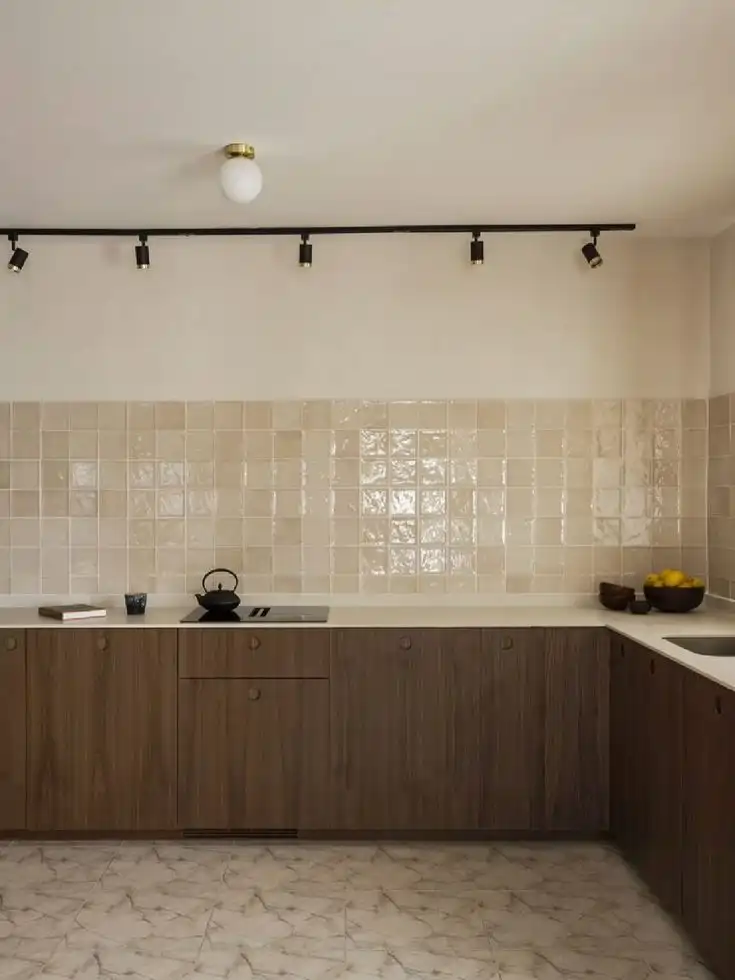
Mint green square zellige tile backsplash in a Midtown condo kitchen renovation.
Most Midtown Atlanta buildings restrict construction noise to weekday hours between 8 AM and 5 PM, sometimes 9 AM to 5 PM. Tile cutting with a wet saw is the loudest part of the job. We can set up the saw in a location that minimizes noise transmission, such as in a parking garage or outside the unit if weather permits. We confirm all noise restrictions with building management before scheduling.
HOAs do not usually restrict the type of tile installed, but they may have rules about the acoustic underlayment required under hard floor surfaces in upper-floor units. Some buildings require a specific IIC (Impact Isolation Class) rating for hard floor installations. We can verify this requirement for your building and recommend an appropriate underlayment product if needed.
Concrete slab substrates are generally good candidates for direct tile installation, but we still test for moisture vapor emission and check for flatness. A slab that is out of flat by more than 1/8 inch over a 10-foot span needs grinding or skim-coating with a floor leveling compound before tile is set. Skipping this step causes lippage, where tile edges are at different heights, which is both a tripping hazard and an aesthetic problem.