Bathroom & Shower Tile
Wet-area tile requires more than good-looking materials. The waterproofing layer underneath is what protects your home long-term.
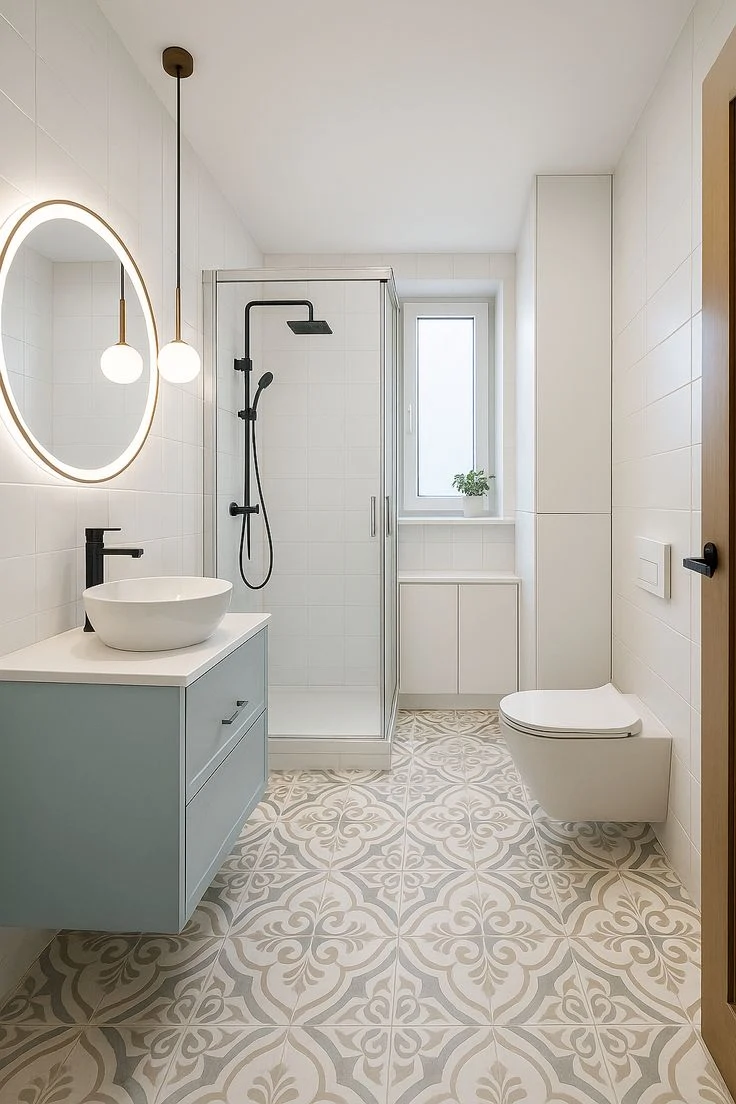
Why wet areas are different
A shower surround is in contact with water every day. The tile itself is not the waterproof layer. The waterproof layer sits behind the tile, and its integrity determines whether the wall assembly stays dry or develops hidden moisture damage over time. Grout is not waterproof. Even properly sealed grout allows some moisture vapor through. The structure behind the tile has to handle that.
We use sheet-applied or liquid-applied waterproof membranes as standard practice in every shower installation. Schluter Kerdi, Laticrete Hydro Ban, and Wedi board are among the systems we use depending on the substrate and the specific application. Each of these creates a continuous barrier that water cannot penetrate even if grout joints crack or open over time.
Shower floor pitch matters more than it seems
A shower floor needs to slope toward the drain at a minimum of 1/4 inch per foot. On a standard 3-foot-wide shower pan, that is a 3/4-inch drop from the perimeter to the center. Getting this slope consistent across the entire pan requires either a sloped mortar bed or a pre-sloped foam substrate panel. We do not tile over a flat floor and rely on the drain to handle standing water. Flat shower floors pool water, accelerate grout deterioration, and eventually allow water to work behind the tile at the perimeter.
This is one of the details that separates a shower that holds up for a decade from one that needs re-tiling in three years.
Tile options for wet areas
Floor tile in showers should have a DCOF (dynamic coefficient of friction) rating of at least 0.42, which is the threshold for wet residential floor surfaces. Smooth large-format porcelain, while visually appealing, often falls below this threshold when wet. Textured porcelain, natural stone with a honed finish, or smaller mosaic tiles with more grout joints per square foot all perform better on wet shower floors. We discuss this tradeoff with clients before material selection is finalized.
Bathroom remodel scope
Full wall tile with waterproof membrane, niche installation, and trim tile at transitions.
Sloped mortar bed or pre-sloped substrate, waterproof membrane, mosaic or textured tile.
Three-wall or five-piece tile installation with proper waterproofing at the tub flange.
Heated or unheated floor tile with appropriate substrate prep for the subfloor type.
Available in these areas
Bathroom and shower tile installation is available in Westside, Midtown Atlanta, and the Marietta Street Artery corridor. Contact us at (706) 510-0545 or through the contact page to start a conversation about your bathroom project.