Commercial Tile Installation
High-traffic tile systems for Atlanta businesses. Lobbies, retail floors, commercial kitchens, and adaptive reuse spaces along the Marietta Street Artery.
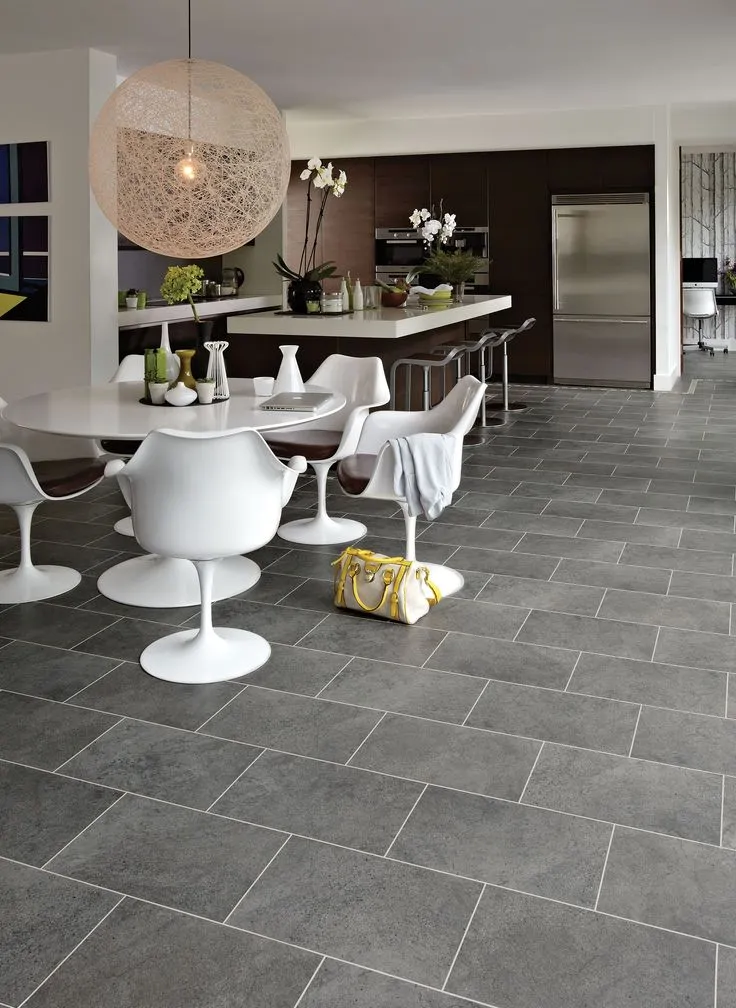
Commercial tile is a different specification
A lobby floor in a Midtown Atlanta office building sees several hundred more foot-traffic cycles per day than a residential kitchen. The tile selection, the adhesive system, and the grout joint treatment all need to reflect that. Commercial installations follow ANSI A108 standards for adhesive coverage and typically require epoxy grout or a grout sealer rated for commercial cleaning agents, because the cleaning protocols in commercial spaces are more aggressive than what a homeowner uses.
We work in Atlanta commercial spaces that include restaurant dining areas, hotel lobby floors, retail storefronts, commercial kitchen back-of-house areas, and office bathrooms. Each of these spaces has specific code considerations, particularly around slip resistance ratings (the DCOF, or dynamic coefficient of friction, requirement for wet commercial floors in Georgia is 0.42 or higher).
Tile rated for the use
The Porcelain Enamel Institute (PEI) abrasion rating system classifies tile from Class 0 (wall use only) through Class 5 (heavy commercial and industrial). Residential floors generally call for Class 3 or 4. A commercial lobby or retail floor warrants Class 4 or 5 porcelain. We specify tile appropriate to the traffic classification of the space, not just the visual appeal of the sample.
For commercial kitchens, we focus on slip-resistance, chemical resistance to cleaning agents and grease, and the ability to handle thermal cycling from floor drains receiving hot water regularly. Quarry tile and through-body porcelain are common appropriate choices for those environments.
Scheduling around business operations
Commercial tile work often has to happen in phases or after hours to avoid disrupting a business. We plan around operational schedules and can sequence work so that one portion of a space remains accessible while another section cures. This is particularly relevant for the Marietta Street Artery corridor where active retail and food service spaces are common.
What commercial tile installation includes
- ANSI A108-compliant adhesive coverage
- Tile specified to PEI and DCOF requirements for the use
- Epoxy grout or commercial-rated sealed grout
- Proper expansion joint placement per TCNA guidelines
- Phased scheduling to accommodate active operations
- Substrate prep including self-leveling underlayment where needed
Where we install commercial tile
Our commercial tile work is concentrated in Westside, Midtown Atlanta, and the Marietta Street Artery. The Marietta Street Artery in particular has seen significant commercial development over recent years, and we have worked in several adaptive reuse and new-construction commercial spaces along that corridor.
Commercial tile projects benefit from early coordination. Reach us at (706) 510-0545 or through the contact page to discuss scope and scheduling.